Building a combined parcel estimate in Kakobuy Spreadsheet
Model the contents and packaging separately, then compare the packed weight with a route’s dimensional rules.
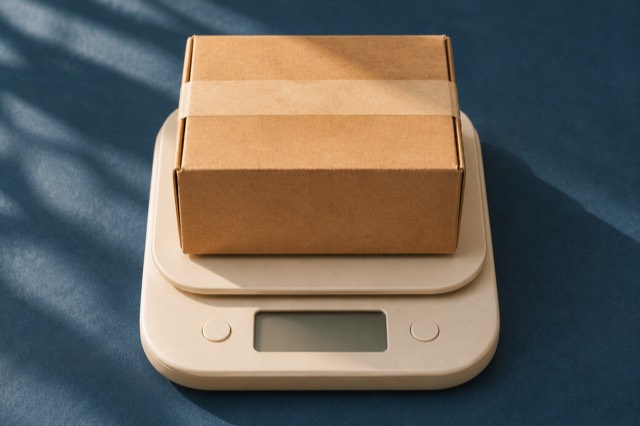
Build a range before the items arrive
Enter the weight estimate for each item and mark whether it includes its original box. Add one line for outer packaging and another for any padding you plan to retain. Keep a low and high estimate for anything uncertain. If a seller supplied a range, preserve both ends so you can see when the parcel might cross a billing step.
Use the route’s stated dimensions and rules
Carrier services can charge by actual weight, dimensional weight or another stated formula. Get the outside dimensions of the prepared parcel and apply the divisor and rounding rules quoted for that route. Record the quote date alongside the number, and replace the estimates when packaging and dimensions are confirmed.
Example with a rigid shoe box
Two garments total 1.10 kg, shoes weigh 0.85 kg, the shoe box weighs 0.25 kg and outer packaging adds 0.30 kg. Estimated actual weight is 2.50 kg. With a 38 × 29 × 20 cm carton and a hypothetical divisor of 5,000, dimensional weight is about 4.41 kg before any rounding. Compare the available services with the measured carton once packing is confirmed.